
AST Battery Energy Storage Systems in Rēzekne and Tume will start providing balancing reserves for power system reliability on 30 October
Latvia's transmission system operator AS "Augstsprieguma tīkls" (AST) has completed the construction of battery energy storage systems (BESS) in Rēzekne and Tume, marking the final stage of the Baltic power systems' synchronisation with Continental Europe Synchronous Area (CESA). The AST batteries will ensure the balancing capacity required for the reliable and stable operation of Latvia's electricity system. Both battery systems have successfully passed qualification tests for providing Frequency Containment Reserves (FCR) and Automatic Frequency Restoration Reserves (aFRR) and are expected to enter the balancing power market on 29 October, with the provision of balancing reserves starting on 30 October.
"Although Latvia's and the Baltics' disconnection from the Russian-controlled energy system and connection to Europe took place already at the beginning of February, the work continued. This year, two more synchronous condensers were installed and commissioned, and now we are opening the battery project — the final step in more than 15 years of effort toward the Baltic States' energy independence. Neither during that historic weekend in February nor at any other stage of the synchronisation project did the public notice any disruption — electricity supply remained stable and reliable. With the AST batteries now operational, our power system will be even reliable," said Minister of Climate and Energy Kaspars Melnis.
"The battery project in Rēzekne and Tume is the culmination of our joint work on the most important energy independence project in recent decades — the synchronisation of the Baltic States with Continental Europe. Batteries are essential for the reliable and stable operation of the system. Rēzekne holds special importance for Latvia's energy independence — it was here, on 8 February, where we disconnected from the Russian electricity grid, symbolizing the end of our historical dependence. Today, our largest battery project in Rēzekne stands as proof of our energy independence. With these batteries, we will maintain the stability and frequency of our grid ourselves, ensuring reliable and continuous electricity supply to every household and business in Latvia. This is an important day for both our company and for Latvia as a whole, strengthening the country's energy reliability," emphasized AST Chairman of the Management Board Rolands Irklis.
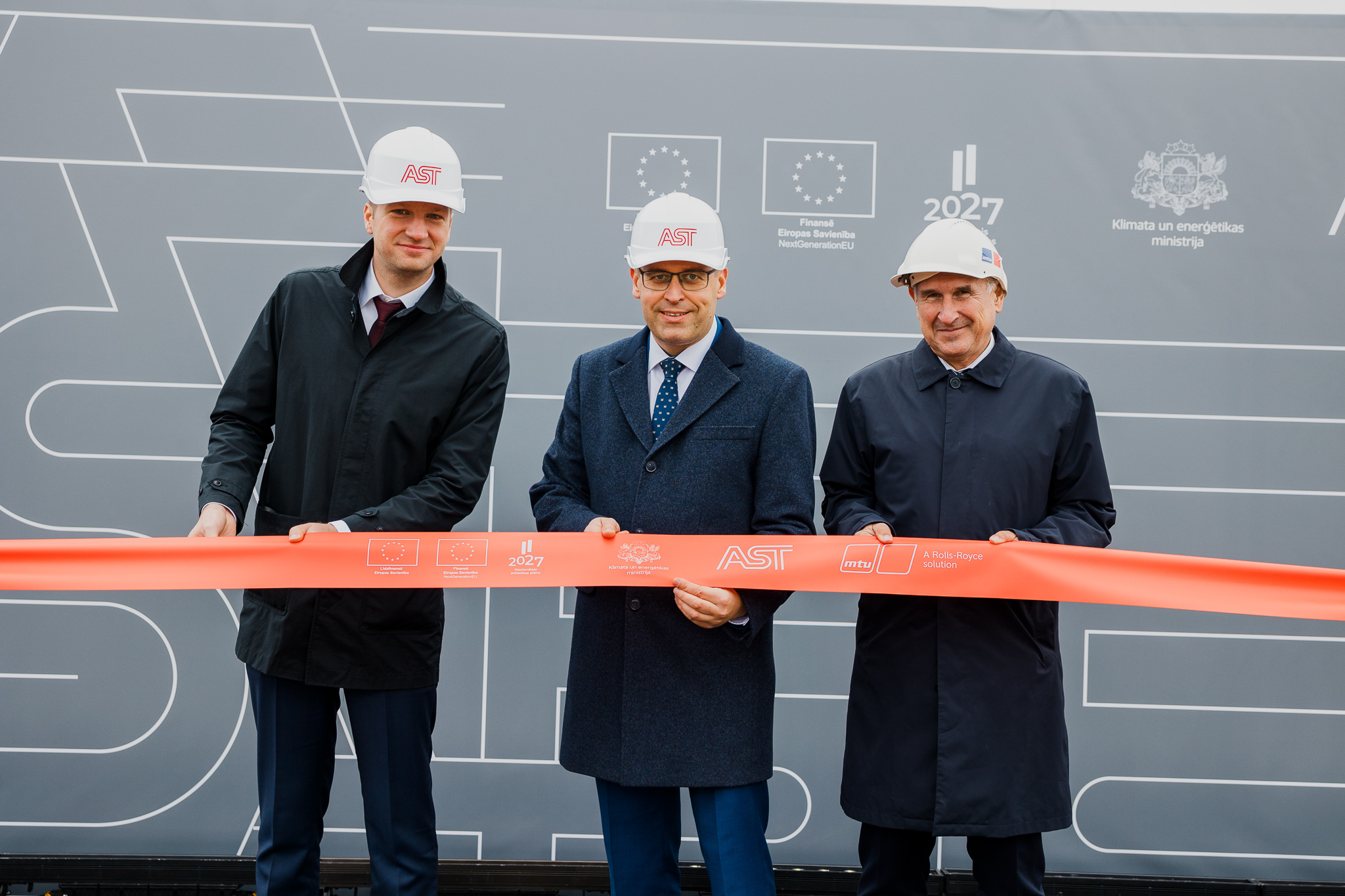
Photo: Rūdolfs Liepiņš
The batteries will also significantly reduce overall balancing costs for consumers and market participants in Latvia and across the Baltics. Starting from 2026, they are expected to cut balancing capacity maintenance costs by approximately EUR 20 million per year.
The AST battery systems are among the most powerful and largest battery energy storage facilities in the European Union, installed in Latvia by Rolls-Royce Solutions (Germany) in cooperation with LEC Construction International. The Rēzekne battery has a capacity of 60 MW / 120 MWh, while the Tume system adds 20 MW / 40 MWh, bringing the total capacity to 80 MW / 160 MWh.
The total investment in the BESS project amounts to EUR 77.07 million. The delivery and installation of the Rēzekne battery system were 100% financed by the European Union's Recovery and Resilience Facility (RePowerEU). Meanwhile, the BESS in Tume and the related substation expansion works in both locations were co-financed up to 75% by the Connecting Europe Facility (CEF). To ensure efficient operation and full utilization of the batteries' capacity, AST, together with scientists from Riga Technical University, has developed a unique battery management system.
On 8 February 2025, the Baltic States disconnected from the Russian-controlled IPS/UPS power system, and on 9 February, successfully connected their electricity systems to the CESA. The Baltic countries are now part of the European grid, which serves more than 400 million consumers across 26 countries. Synchronisation allows the Baltic States to operate their electricity systems in close cooperation with continental Europe, ensuring stable and reliable frequency regulation, thus strengthening energy independence and regional energy security.
The synchronisation of the Baltic power systems with continental Europe not only enhances the reliability of electricity supply in the region but also contributes to the development of the European internal energy market and creates new business opportunities. Furthermore, the investments made under this project are a prerequisite for safely connecting large-scale renewable energy sources to the transmission grid, supporting the European Green Deal objectives.